
Is Walking Barefoot at Home Bad for Your Feet?
Is Walking Barefoot at Home Bad for Your Feet?
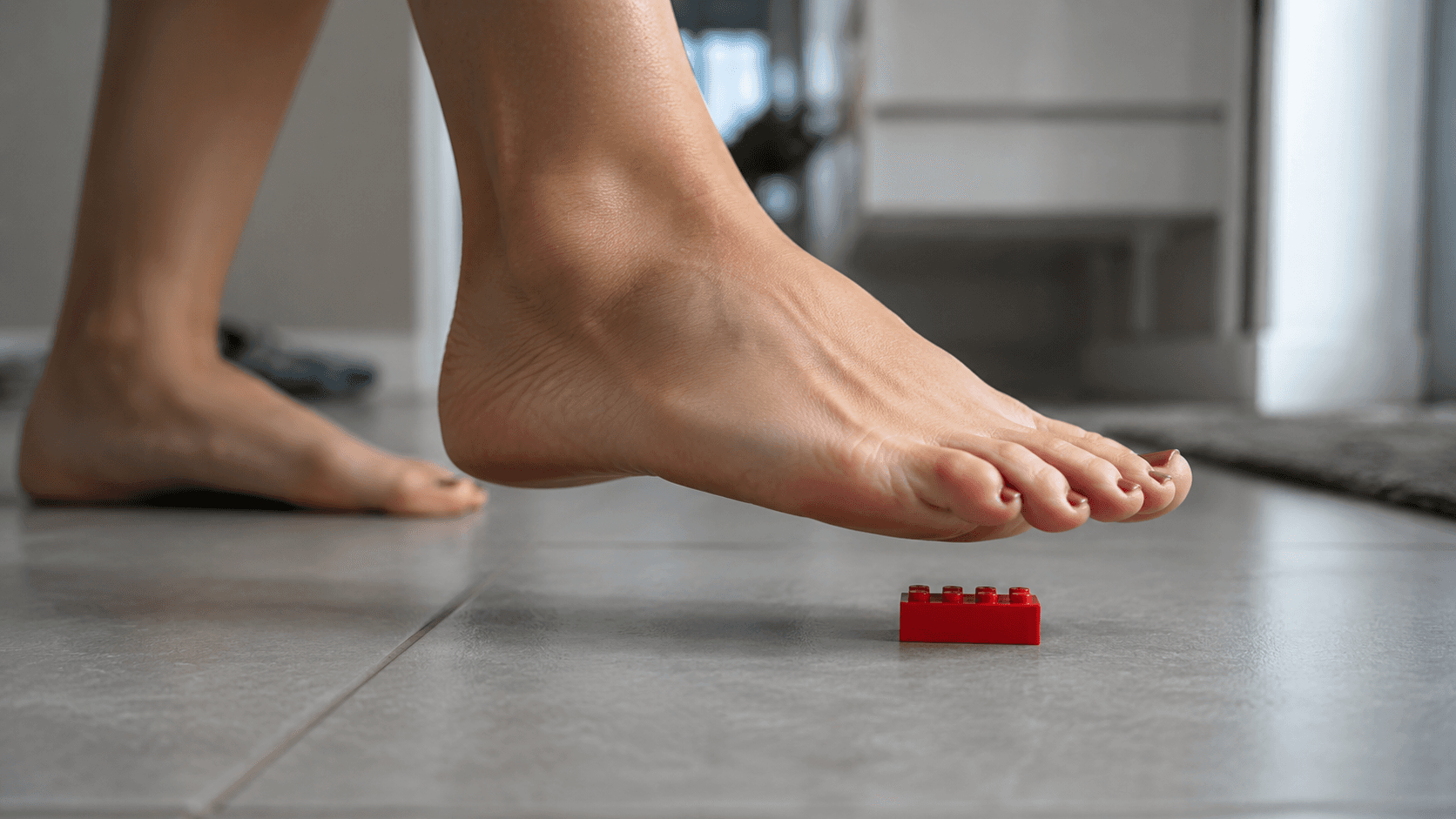
It is one of the internet's favourite foot debates: one camp says barefoot is how feet were designed to work, the other blames hardwood floors for half of modern heel pain. "Is walking barefoot at home bad?" is searched constantly — especially since home offices multiplied the hours people spend padding around the kitchen in socks. The honest answer is that both camps hold a piece of it, and which piece applies to you depends on your feet. Here is the breakdown from the Chiropodists at Donwood Foot and Orthotic Clinic at 51 Underhill Drive in North York.
Is walking barefoot at home bad for your feet?
For healthy, pain-free feet, barefoot time at home is generally fine and arguably beneficial — it lets foot muscles work naturally. For feet with active problems — plantar fasciitis, flattening arches, heel pain — and for anyone with diabetes, hours of barefoot walking on hard modern floors commonly makes things worse. The nuance the debate misses: the human foot evolved for grass, soil, and sand — surfaces that deform. Tile, hardwood, and concrete do not deform, so the foot absorbs everything, thousands of steps a day.
Who lands where:
Fine barefoot: healthy feet without symptoms — barefoot time maintains natural strength and sensory feedback
Should limit it: anyone with active heel or arch pain (hard-floor barefoot hours are a classic aggravator our patients discover during renovations and new-house moves), significant flat feet, or plantar fasciitis in recovery
Should not go barefoot at home at all: people with diabetes with any neuropathy — an unfelt LEGO brick, splinter, or dropped utensil is a genuine wound risk
What should you wear at home instead?
If you are in the limit-it camp, the answer is a supportive indoor shoe or structured slipper — something with an actual footbed, a cushioned sole, and ideally a secured heel — not the flat, dead slippers most closets contain. This single change is one of the most common turning points in stubborn plantar fasciitis: patients treat the condition diligently, then walk barefoot on hardwood for six waking hours daily and wonder why mornings still hurt. Practical criteria: a sole you cannot fold in half, visible arch contour, a back or strap that keeps it on your foot (backless slides make toes claw to grip), and washability. People who wear orthotics can go one better — a dedicated indoor pair of shoes with the orthotics in, or sandal-style footwear with a supportive footbed. For everyone: socks-only on hardwood combines zero support with zero traction, and stairs plus socks is its own category of injury we would rather you avoid.
How can a Chiropodist help you sort out home footwear?
A Chiropodist can tell you which camp your feet are actually in — evidence beats internet debate — and set you up accordingly. At Donwood Foot and Orthotic Clinic, an assessment may include examining your arch behaviour under load, any current symptoms, and your home-surface reality, then matching recommendations to it: barefoot freedom for feet that have earned it, indoor support strategies for heel pain and flat arches, custom orthotics integration for the hours at home where most orthotics sit unworn in a hallway shoe, and firm guidance for diabetic feet, where the barefoot question has a one-word answer. Extended benefits accepted, with direct billing available.
Frequently Asked Questions
Does walking barefoot strengthen your feet?
Yes, modestly — barefoot movement makes the intrinsic foot muscles work harder than they do in structured shoes, and on forgiving surfaces that is a genuine benefit. The strengthening argument weakens on hard flat floors and disappears entirely for feet with active mechanical pain.
Why do my heels hurt after walking barefoot at home?
Hard floors return every bit of impact force to your heel and give your arch nothing to push against — for a plantar fascia that is already irritated, each barefoot hour re-aggravates it. Supportive indoor footwear typically improves this within weeks.
Should people with diabetes ever go barefoot indoors?
No — with any degree of neuropathy, unnoticed injuries from ordinary household hazards are how many diabetic foot wounds begin, and guidelines uniformly advise footwear indoors. A structured slipper kept at the bedside is the practical solution.
Where can I get advice on foot support in North York?
Donwood Foot and Orthotic Clinic at 51 Underhill Drive, Unit 4 in North York serves Don Mills, Victoria Village, Leaside, and surrounding Toronto neighbourhoods. Call (416) 445-1414 or book online — no referral needed.
Heels complaining about your hardwood? A Chiropodist at Donwood Foot and Orthotic Clinic can settle your barefoot question with an actual assessment. 📞 (416) 445-1414 or Book an Appointment
Related reading: Standing all day — foot care for workers
It is one of the internet's favourite foot debates: one camp says barefoot is how feet were designed to work, the other blames hardwood floors for half of modern heel pain. "Is walking barefoot at home bad?" is searched constantly — especially since home offices multiplied the hours people spend padding around the kitchen in socks. The honest answer is that both camps hold a piece of it, and which piece applies to you depends on your feet. Here is the breakdown from the Chiropodists at Donwood Foot and Orthotic Clinic at 51 Underhill Drive in North York.
Is walking barefoot at home bad for your feet?
For healthy, pain-free feet, barefoot time at home is generally fine and arguably beneficial — it lets foot muscles work naturally. For feet with active problems — plantar fasciitis, flattening arches, heel pain — and for anyone with diabetes, hours of barefoot walking on hard modern floors commonly makes things worse. The nuance the debate misses: the human foot evolved for grass, soil, and sand — surfaces that deform. Tile, hardwood, and concrete do not deform, so the foot absorbs everything, thousands of steps a day.
Who lands where:
Fine barefoot: healthy feet without symptoms — barefoot time maintains natural strength and sensory feedback
Should limit it: anyone with active heel or arch pain (hard-floor barefoot hours are a classic aggravator our patients discover during renovations and new-house moves), significant flat feet, or plantar fasciitis in recovery
Should not go barefoot at home at all: people with diabetes with any neuropathy — an unfelt LEGO brick, splinter, or dropped utensil is a genuine wound risk
What should you wear at home instead?
If you are in the limit-it camp, the answer is a supportive indoor shoe or structured slipper — something with an actual footbed, a cushioned sole, and ideally a secured heel — not the flat, dead slippers most closets contain. This single change is one of the most common turning points in stubborn plantar fasciitis: patients treat the condition diligently, then walk barefoot on hardwood for six waking hours daily and wonder why mornings still hurt. Practical criteria: a sole you cannot fold in half, visible arch contour, a back or strap that keeps it on your foot (backless slides make toes claw to grip), and washability. People who wear orthotics can go one better — a dedicated indoor pair of shoes with the orthotics in, or sandal-style footwear with a supportive footbed. For everyone: socks-only on hardwood combines zero support with zero traction, and stairs plus socks is its own category of injury we would rather you avoid.
How can a Chiropodist help you sort out home footwear?
A Chiropodist can tell you which camp your feet are actually in — evidence beats internet debate — and set you up accordingly. At Donwood Foot and Orthotic Clinic, an assessment may include examining your arch behaviour under load, any current symptoms, and your home-surface reality, then matching recommendations to it: barefoot freedom for feet that have earned it, indoor support strategies for heel pain and flat arches, custom orthotics integration for the hours at home where most orthotics sit unworn in a hallway shoe, and firm guidance for diabetic feet, where the barefoot question has a one-word answer. Extended benefits accepted, with direct billing available.
Frequently Asked Questions
Does walking barefoot strengthen your feet?
Yes, modestly — barefoot movement makes the intrinsic foot muscles work harder than they do in structured shoes, and on forgiving surfaces that is a genuine benefit. The strengthening argument weakens on hard flat floors and disappears entirely for feet with active mechanical pain.
Why do my heels hurt after walking barefoot at home?
Hard floors return every bit of impact force to your heel and give your arch nothing to push against — for a plantar fascia that is already irritated, each barefoot hour re-aggravates it. Supportive indoor footwear typically improves this within weeks.
Should people with diabetes ever go barefoot indoors?
No — with any degree of neuropathy, unnoticed injuries from ordinary household hazards are how many diabetic foot wounds begin, and guidelines uniformly advise footwear indoors. A structured slipper kept at the bedside is the practical solution.
Where can I get advice on foot support in North York?
Donwood Foot and Orthotic Clinic at 51 Underhill Drive, Unit 4 in North York serves Don Mills, Victoria Village, Leaside, and surrounding Toronto neighbourhoods. Call (416) 445-1414 or book online — no referral needed.
Heels complaining about your hardwood? A Chiropodist at Donwood Foot and Orthotic Clinic can settle your barefoot question with an actual assessment. 📞 (416) 445-1414 or Book an Appointment
Related reading: Standing all day — foot care for workers
Chiropodist Foot Care Serving North York and East Toronto
Donwood Foot and Orthotic Clinic — 51 Underhill Dr., Unit 4, North York, ON M3A 2J8 · (416) 445-1414. Our Chiropodists provide foot assessments, custom orthotics, diabetic foot care, and medical foot care for patients from Don Mills, Parkwoods, Victoria Village, Leaside, Bayview Village, York Mills, Lawrence Park, Willowdale, Flemingdon Park, Henry Farm, Don Valley Village, East York, and across Toronto. Extended benefits accepted, with direct billing available for most major insurance providers. Book online any time at donwoodfootclinic.janeapp.com.
©2026 - Donwood Foot & Orthotics Clinic
Terms of Use
Created by
Clearmattr
©2026 - Donwood Foot & Orthotics Clinic
Terms of Use
Created by
Clearmattr
©2026 - Donwood Foot & Orthotics Clinic
Terms of Use
Created by
Clearmattr