
The Race-Day Blister Prevention Kit: What Toronto Runners Should Sort Out Before the Start Line
The Race-Day Blister Prevention Kit: What Toronto Runners Should Sort Out Before the Start Line
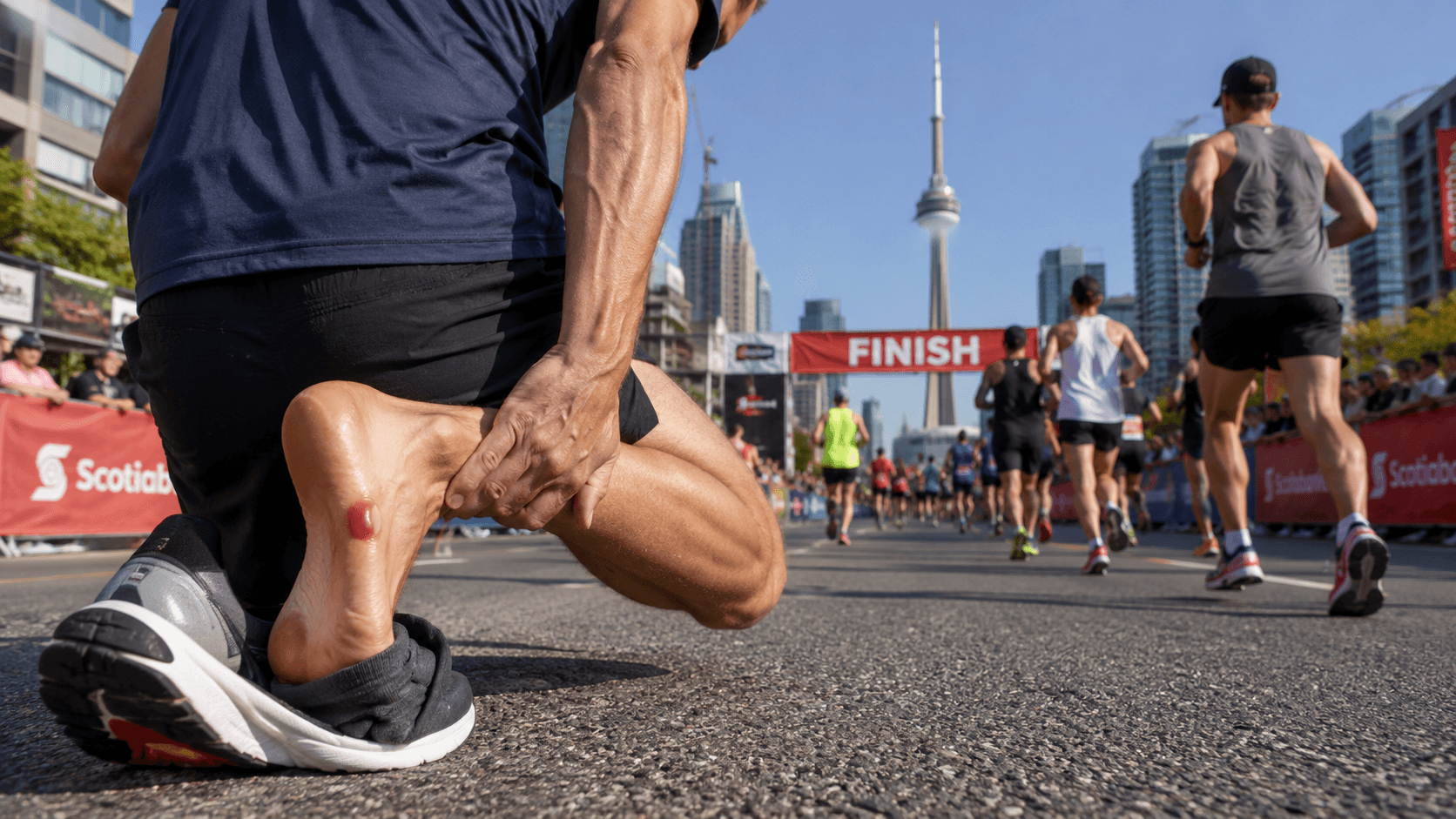
Ask anyone who has hobbled the last 10K of a Toronto race with a heel blister: small skin problems become very large race problems. Blisters are the most common race-day complaint at every distance, and nearly all of them are preventable with preparation that starts weeks out — not the night before. Here is how the Chiropodists at Donwood Foot and Orthotic Clinic in North York suggest runners think about blister prevention.
Why Do Blisters Happen in Races But Not Training?
Races add three ingredients training usually lacks: longer distance, faster pace, and adrenaline that masks early hot spots. Friction plus moisture plus repetition creates the shear forces that separate skin layers. On race day you run farther and harder than usual, sweat more, possibly race in different weather, and ignore the early warning warmth because you are focused on pace. By the time a blister announces itself, it is already formed.
What Should Be in a Runner's Blister Prevention Plan?
Everything on race day should be a rehearsal of something already tested. The essentials:
Race in proven shoes and socks — nothing new on race day, including socks fresh out of the package
Wicking socks, never cotton — moisture is half the equation
Lubricate known hot spots — anti-chafe balm on heels, toes, and the ball of the foot
Trim nails days ahead — straight across, not rounded into the corners
Manage callus in advance — thick callus does not protect against blisters; fluid can pool painfully beneath it. A Chiropodist can reduce it safely (corns and calluses)
Tape proactively if you reliably blister in one spot — and practice the taping on long runs first
When Is a Blister a Reason to See a Chiropodist?
See a Chiropodist when blisters recur in the same location, form under calluses or nails, or show signs of infection. Recurring blisters are a mechanical signal — something about fit, gait, or foot structure concentrates friction there, and a foot assessment can usually find it. Blood blisters under nails and blisters in people with diabetes deserve professional attention rather than home surgery; if you have diabetes, our diabetic foot care page explains why. Runners across North York, Don Mills, and East York can book at 51 Underhill Drive.
Frequently Asked Questions
Should I pop a blister after a race?
Generally no — intact skin is the body's own sterile dressing. Small blisters usually resolve if protected with a cushioned dressing. Large, painful, or recurring blisters, or any blister if you have diabetes or circulation issues, should be assessed and drained professionally if needed.
Do double-layer socks actually work?
For many runners, yes — the layers shear against each other instead of against your skin. They are worth testing during long runs if you blister despite well-fitted shoes.
Why do I blister under my callus?
A thick callus is rigid; the soft tissue underneath still shears with each stride, so fluid collects beneath the hard layer — one of the most painful blister types. Keeping callus professionally managed before race season prevents this pattern.
Where can I get pre-race foot care in North York?
Donwood Foot and Orthotic Clinic at 51 Underhill Drive, Unit 4, North York offers callus care, nail care, and foot assessments for runners across Toronto.
A race season without blisters starts weeks early. Book pre-race foot care with a Chiropodist at Donwood Foot and Orthotic Clinic. 📞 (416) 445-1414 | Book an Appointment
Related reading: Plantar Wart, Corn, or Callus? How to Tell the Difference
Ask anyone who has hobbled the last 10K of a Toronto race with a heel blister: small skin problems become very large race problems. Blisters are the most common race-day complaint at every distance, and nearly all of them are preventable with preparation that starts weeks out — not the night before. Here is how the Chiropodists at Donwood Foot and Orthotic Clinic in North York suggest runners think about blister prevention.
Why Do Blisters Happen in Races But Not Training?
Races add three ingredients training usually lacks: longer distance, faster pace, and adrenaline that masks early hot spots. Friction plus moisture plus repetition creates the shear forces that separate skin layers. On race day you run farther and harder than usual, sweat more, possibly race in different weather, and ignore the early warning warmth because you are focused on pace. By the time a blister announces itself, it is already formed.
What Should Be in a Runner's Blister Prevention Plan?
Everything on race day should be a rehearsal of something already tested. The essentials:
Race in proven shoes and socks — nothing new on race day, including socks fresh out of the package
Wicking socks, never cotton — moisture is half the equation
Lubricate known hot spots — anti-chafe balm on heels, toes, and the ball of the foot
Trim nails days ahead — straight across, not rounded into the corners
Manage callus in advance — thick callus does not protect against blisters; fluid can pool painfully beneath it. A Chiropodist can reduce it safely (corns and calluses)
Tape proactively if you reliably blister in one spot — and practice the taping on long runs first
When Is a Blister a Reason to See a Chiropodist?
See a Chiropodist when blisters recur in the same location, form under calluses or nails, or show signs of infection. Recurring blisters are a mechanical signal — something about fit, gait, or foot structure concentrates friction there, and a foot assessment can usually find it. Blood blisters under nails and blisters in people with diabetes deserve professional attention rather than home surgery; if you have diabetes, our diabetic foot care page explains why. Runners across North York, Don Mills, and East York can book at 51 Underhill Drive.
Frequently Asked Questions
Should I pop a blister after a race?
Generally no — intact skin is the body's own sterile dressing. Small blisters usually resolve if protected with a cushioned dressing. Large, painful, or recurring blisters, or any blister if you have diabetes or circulation issues, should be assessed and drained professionally if needed.
Do double-layer socks actually work?
For many runners, yes — the layers shear against each other instead of against your skin. They are worth testing during long runs if you blister despite well-fitted shoes.
Why do I blister under my callus?
A thick callus is rigid; the soft tissue underneath still shears with each stride, so fluid collects beneath the hard layer — one of the most painful blister types. Keeping callus professionally managed before race season prevents this pattern.
Where can I get pre-race foot care in North York?
Donwood Foot and Orthotic Clinic at 51 Underhill Drive, Unit 4, North York offers callus care, nail care, and foot assessments for runners across Toronto.
A race season without blisters starts weeks early. Book pre-race foot care with a Chiropodist at Donwood Foot and Orthotic Clinic. 📞 (416) 445-1414 | Book an Appointment
Related reading: Plantar Wart, Corn, or Callus? How to Tell the Difference
Chiropodist Foot Care Serving North York and East Toronto
Donwood Foot and Orthotic Clinic — 51 Underhill Dr., Unit 4, North York, ON M3A 2J8 · (416) 445-1414. Our Chiropodists provide foot assessments, custom orthotics, diabetic foot care, and medical foot care for patients from Don Mills, Parkwoods, Victoria Village, Leaside, Bayview Village, York Mills, Lawrence Park, Willowdale, Flemingdon Park, Henry Farm, Don Valley Village, East York, and across Toronto. Extended benefits accepted, with direct billing available for most major insurance providers. Book online any time at donwoodfootclinic.janeapp.com.
©2026 - Donwood Foot & Orthotics Clinic
Terms of Use
Created by
Clearmattr
©2026 - Donwood Foot & Orthotics Clinic
Terms of Use
Created by
Clearmattr
©2026 - Donwood Foot & Orthotics Clinic
Terms of Use
Created by
Clearmattr