Flat Feet in Adults: Do They Actually Cause Problems, and What Can Be Done?
Flat Feet in Adults: Do They Actually Cause Problems, and What Can Be Done?
Flat Feet in Adults: Do They Actually Cause Problems, and What Can Be Done?
Flat feet in adults don't always cause problems — but when they do, the effects extend well beyond the foot itself. The honest answer to "do I need to do something about my flat feet?" depends on whether you have symptoms, not on what your arch looks like standing still. This guide explains when flat feet and high arches are clinically relevant, what signs suggest they're affecting your body, and what a Chiropodist can do to assess and address them in Toronto and North York.
Do Flat Feet Always Cause Problems?
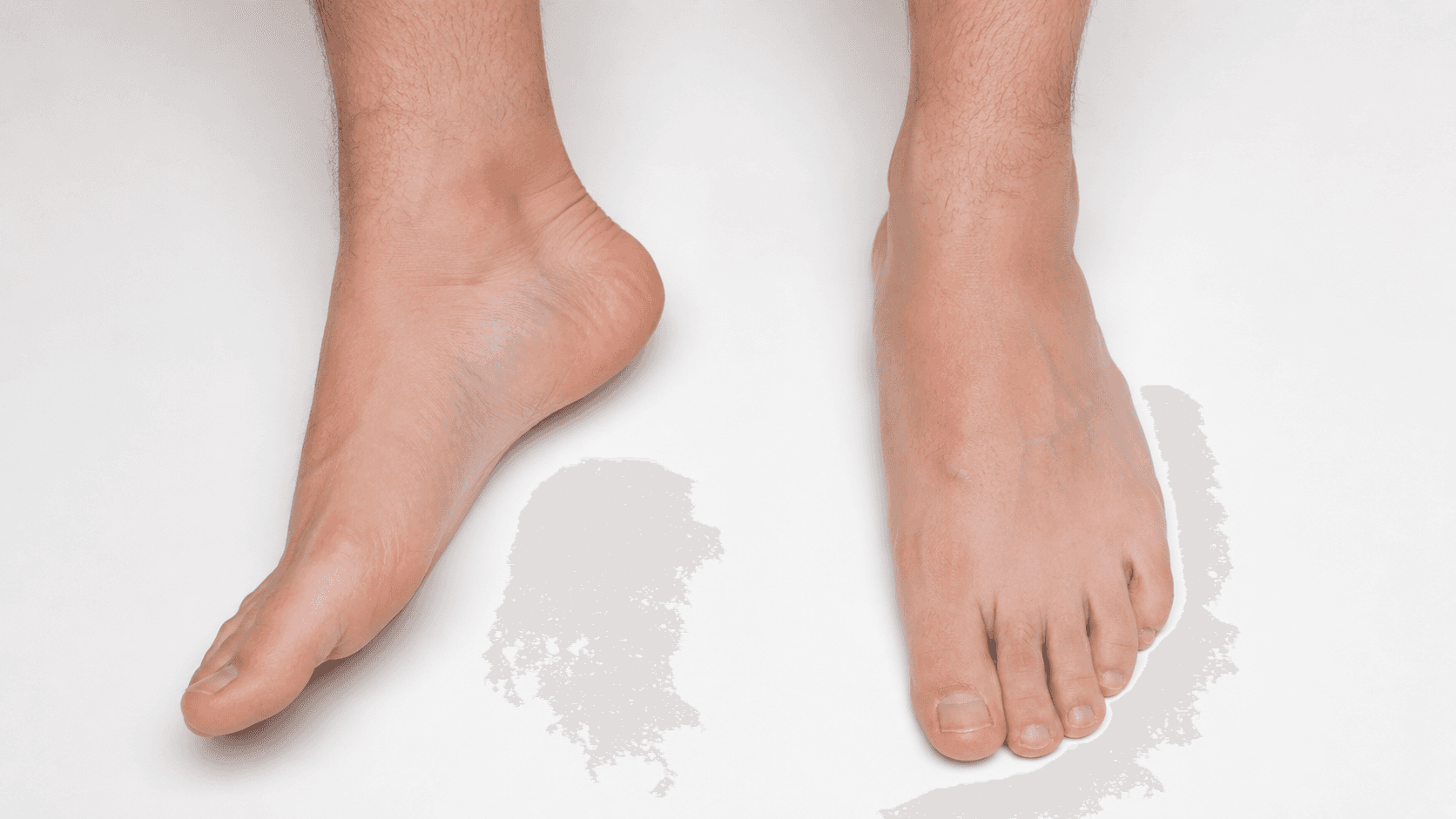
Flat feet — also called pes planus or fallen arches — occur when the arch of the foot makes full or near-full contact with the ground. In adults, this can be a lifelong structural trait or a gradual change that develops over time, sometimes associated with weight, activity level, or changes to the posterior tibial tendon.
Many people with flat feet have no pain at all and function without restriction. For these individuals, treatment is not necessary. The question is not whether your arch is visually present — it's whether your foot mechanics are generating symptoms.
Flat feet become clinically relevant when they contribute to:
Pain or fatigue in the arch, heel, or ball of the foot
Ankle pain or instability
Knee pain that worsens with walking or standing for prolonged periods
Hip or lower back ache linked to altered gait mechanics
Rapid or uneven shoe wear, particularly on the inside edge of the heel
If any of these apply, it's worth having a Chiropodist assess whether your foot structure is a contributing factor. See the flat or high arched feet service page for more detail.
High Arches — A Different and Often Overlooked Problem
High arches (pes cavus) are less common than flat feet but present a different set of challenges. A high arch is rigid — it doesn't flex and absorb load the way a more mobile foot does. This rigidity means:
Load is concentrated on the heel and the ball of the foot, rather than distributed across the arch
The foot is less able to adapt to varied terrain
Ankle stability is often reduced, increasing the risk of sprains
Lateral (outer edge) foot pain is common, as weight distribution is shifted outward
People with high arches may find that standard cushioned footwear provides limited relief, because the structural issue is rigidity rather than insufficient support. A custom orthotic for a high-arched foot is designed very differently from one for a flat foot — the goal is accommodation and shock absorption rather than arch support in the traditional sense.
The Biomechanical Assessment: How a Chiropodist Evaluates Your Arches
Not every flat foot or high arch causes the same problem — or any problem. A Chiropodist uses a structured biomechanical assessment to determine whether arch shape is clinically relevant to your specific symptoms.
This typically includes:
Static assessment — evaluating foot posture and arch shape in a standing position
Gait analysis — observing how load moves through the foot during walking
Range of motion — assessing ankle, subtalar, and toe joint flexibility
Footwear assessment — wear patterns on your shoes reveal the mechanical story
Lower limb alignment — evaluating the relationship between foot mechanics, knee tracking, and hip position
A chiropody assessment at Donwood provides this full picture — not just a visual impression of the arch, but an understanding of what the foot is doing during movement and whether that's contributing to your symptoms.
TTC Walkers, PATH Commuters, and Don Mills Workers — Why Hard Floors Matter
For Torontonians who walk significant distances on hard surfaces — TTC platforms, the PATH underground network, concrete warehouse and industrial floors, hospital hallways — flat feet are under more consistent mechanical stress than for people with lighter daily loading.
The cumulative effect of long-duration walking on hard, non-yielding surfaces amplifies the demands on feet that already pronate significantly. This is a meaningful context for the biomechanical assessment: a foot that's symptom-free on a typical day may become a problem under sustained loading.
Custom Orthotics for Flat Feet and High Arches
When arch mechanics are a contributing factor to symptoms, custom foot orthotics are typically part of the management plan. The key distinction from over-the-counter arch supports: custom orthotics are fabricated from a cast or scan of your specific foot, in a controlled, corrected position. They're prescribed to address your particular mechanical pattern — not a generic arch height.
For flat feet, orthotics are typically designed to support the medial arch and limit excessive pronation during gait.
For high arches, orthotics are typically designed to cushion load at the heel and forefoot, and to accommodate the rigid arch rather than push against it.
A Chiropodist determines the appropriate specifications based on the assessment findings and your activity demands. If pronation-related heel pain is part of your presentation, see also the heel pain service page.
Frequently Asked Questions
Can flat feet cause knee or back pain?
Yes. When the foot pronates excessively, the lower limb rotates inward with each step — this can affect knee tracking, hip alignment, and lumbar load. Knee pain that worsens with sustained walking or standing, and lower back ache linked to activity, are sometimes connected to foot mechanics. A biomechanical assessment determines whether this is the case for your specific presentation.
Do children with flat feet need treatment?
Most children have naturally flat feet before age 5–6, and many develop a functional arch over time without intervention. Flat feet in children that cause pain, affect gait noticeably, or persist with symptoms into later childhood warrant assessment. A Chiropodist can distinguish developmental flat foot from conditions that benefit from earlier intervention.
Can flat feet be corrected with exercise?
Certain exercises — particularly those targeting the intrinsic foot muscles and the posterior tibial tendon — can improve foot strength and, in some cases, functional arch position. Exercise alone rarely corrects a structural flat foot in adults. A Chiropodist can advise on appropriate exercises as part of a broader management plan.
What's the difference between overpronation and flat feet?
Flat feet describe the static shape of the foot — the arch makes contact with the ground. Overpronation describes a motion pattern — the foot rolls inward excessively during the gait cycle. Many flat-footed people overpronate, but not all do, and overpronation can occur in people with an average arch height. The biomechanical assessment evaluates both.
Are custom orthotics covered by insurance for flat feet?
Many extended health plans in Ontario include coverage for custom foot orthotics when prescribed by a regulated health professional for a clinical indication. Flat feet causing symptoms are a recognized clinical indication. Coverage amounts and documentation requirements vary by plan. Donwood accepts most major extended health plans. Direct billing is not available for orthotics, so the clinic provides the documentation and prescription your insurer requires for your claim.
A Chiropody Assessment Takes Less Than an Hour — and Gives You a Clear Picture
Arch shape alone doesn't determine whether you need intervention. A thorough biomechanical assessment does. If you're experiencing foot, ankle, knee, or back symptoms that may be related to your arch structure, a Chiropodist at Donwood can assess and advise.
Donwood Foot and Orthotic Clinic is located in Don Mills, North York at 51 Underhill Dr., Unit 4. Book online at donwoodfootclinic.janeapp.com or call us at (416) 445-1414.
Related reading: Custom Orthotics in North York: How They Help, What They Treat, and When to Book a Foot Assessment
Flat Feet in Adults: Do They Actually Cause Problems, and What Can Be Done?
Flat feet in adults don't always cause problems — but when they do, the effects extend well beyond the foot itself. The honest answer to "do I need to do something about my flat feet?" depends on whether you have symptoms, not on what your arch looks like standing still. This guide explains when flat feet and high arches are clinically relevant, what signs suggest they're affecting your body, and what a Chiropodist can do to assess and address them in Toronto and North York.
Do Flat Feet Always Cause Problems?
Flat feet — also called pes planus or fallen arches — occur when the arch of the foot makes full or near-full contact with the ground. In adults, this can be a lifelong structural trait or a gradual change that develops over time, sometimes associated with weight, activity level, or changes to the posterior tibial tendon.
Many people with flat feet have no pain at all and function without restriction. For these individuals, treatment is not necessary. The question is not whether your arch is visually present — it's whether your foot mechanics are generating symptoms.
Flat feet become clinically relevant when they contribute to:
Pain or fatigue in the arch, heel, or ball of the foot
Ankle pain or instability
Knee pain that worsens with walking or standing for prolonged periods
Hip or lower back ache linked to altered gait mechanics
Rapid or uneven shoe wear, particularly on the inside edge of the heel
If any of these apply, it's worth having a Chiropodist assess whether your foot structure is a contributing factor. See the flat or high arched feet service page for more detail.
High Arches — A Different and Often Overlooked Problem
High arches (pes cavus) are less common than flat feet but present a different set of challenges. A high arch is rigid — it doesn't flex and absorb load the way a more mobile foot does. This rigidity means:
Load is concentrated on the heel and the ball of the foot, rather than distributed across the arch
The foot is less able to adapt to varied terrain
Ankle stability is often reduced, increasing the risk of sprains
Lateral (outer edge) foot pain is common, as weight distribution is shifted outward
People with high arches may find that standard cushioned footwear provides limited relief, because the structural issue is rigidity rather than insufficient support. A custom orthotic for a high-arched foot is designed very differently from one for a flat foot — the goal is accommodation and shock absorption rather than arch support in the traditional sense.
The Biomechanical Assessment: How a Chiropodist Evaluates Your Arches
Not every flat foot or high arch causes the same problem — or any problem. A Chiropodist uses a structured biomechanical assessment to determine whether arch shape is clinically relevant to your specific symptoms.
This typically includes:
Static assessment — evaluating foot posture and arch shape in a standing position
Gait analysis — observing how load moves through the foot during walking
Range of motion — assessing ankle, subtalar, and toe joint flexibility
Footwear assessment — wear patterns on your shoes reveal the mechanical story
Lower limb alignment — evaluating the relationship between foot mechanics, knee tracking, and hip position
A chiropody assessment at Donwood provides this full picture — not just a visual impression of the arch, but an understanding of what the foot is doing during movement and whether that's contributing to your symptoms.
TTC Walkers, PATH Commuters, and Don Mills Workers — Why Hard Floors Matter
For Torontonians who walk significant distances on hard surfaces — TTC platforms, the PATH underground network, concrete warehouse and industrial floors, hospital hallways — flat feet are under more consistent mechanical stress than for people with lighter daily loading.
The cumulative effect of long-duration walking on hard, non-yielding surfaces amplifies the demands on feet that already pronate significantly. This is a meaningful context for the biomechanical assessment: a foot that's symptom-free on a typical day may become a problem under sustained loading.
Custom Orthotics for Flat Feet and High Arches
When arch mechanics are a contributing factor to symptoms, custom foot orthotics are typically part of the management plan. The key distinction from over-the-counter arch supports: custom orthotics are fabricated from a cast or scan of your specific foot, in a controlled, corrected position. They're prescribed to address your particular mechanical pattern — not a generic arch height.
For flat feet, orthotics are typically designed to support the medial arch and limit excessive pronation during gait.
For high arches, orthotics are typically designed to cushion load at the heel and forefoot, and to accommodate the rigid arch rather than push against it.
A Chiropodist determines the appropriate specifications based on the assessment findings and your activity demands. If pronation-related heel pain is part of your presentation, see also the heel pain service page.
Frequently Asked Questions
Can flat feet cause knee or back pain?
Yes. When the foot pronates excessively, the lower limb rotates inward with each step — this can affect knee tracking, hip alignment, and lumbar load. Knee pain that worsens with sustained walking or standing, and lower back ache linked to activity, are sometimes connected to foot mechanics. A biomechanical assessment determines whether this is the case for your specific presentation.
Do children with flat feet need treatment?
Most children have naturally flat feet before age 5–6, and many develop a functional arch over time without intervention. Flat feet in children that cause pain, affect gait noticeably, or persist with symptoms into later childhood warrant assessment. A Chiropodist can distinguish developmental flat foot from conditions that benefit from earlier intervention.
Can flat feet be corrected with exercise?
Certain exercises — particularly those targeting the intrinsic foot muscles and the posterior tibial tendon — can improve foot strength and, in some cases, functional arch position. Exercise alone rarely corrects a structural flat foot in adults. A Chiropodist can advise on appropriate exercises as part of a broader management plan.
What's the difference between overpronation and flat feet?
Flat feet describe the static shape of the foot — the arch makes contact with the ground. Overpronation describes a motion pattern — the foot rolls inward excessively during the gait cycle. Many flat-footed people overpronate, but not all do, and overpronation can occur in people with an average arch height. The biomechanical assessment evaluates both.
Are custom orthotics covered by insurance for flat feet?
Many extended health plans in Ontario include coverage for custom foot orthotics when prescribed by a regulated health professional for a clinical indication. Flat feet causing symptoms are a recognized clinical indication. Coverage amounts and documentation requirements vary by plan. Donwood accepts most major extended health plans. Direct billing is not available for orthotics, so the clinic provides the documentation and prescription your insurer requires for your claim.
A Chiropody Assessment Takes Less Than an Hour — and Gives You a Clear Picture
Arch shape alone doesn't determine whether you need intervention. A thorough biomechanical assessment does. If you're experiencing foot, ankle, knee, or back symptoms that may be related to your arch structure, a Chiropodist at Donwood can assess and advise.
Donwood Foot and Orthotic Clinic is located in Don Mills, North York at 51 Underhill Dr., Unit 4. Book online at donwoodfootclinic.janeapp.com or call us at (416) 445-1414.
Related reading: Custom Orthotics in North York: How They Help, What They Treat, and When to Book a Foot Assessment
Chiropodist Foot Care Serving North York and East Toronto
Donwood Foot and Orthotic Clinic — 51 Underhill Dr., Unit 4, North York, ON M3A 2J8 · (416) 445-1414. Our Chiropodists provide foot assessments, custom orthotics, diabetic foot care, and medical foot care for patients from Don Mills, Parkwoods, Victoria Village, Leaside, Bayview Village, York Mills, Lawrence Park, Willowdale, Flemingdon Park, Henry Farm, Don Valley Village, East York, and across Toronto. Extended benefits accepted, with direct billing available for most major insurance providers. Book online any time at donwoodfootclinic.janeapp.com.
©2026 - Donwood Foot & Orthotics Clinic
Terms of Use
Created by
Clearmattr
©2026 - Donwood Foot & Orthotics Clinic
Terms of Use
Created by
Clearmattr
©2026 - Donwood Foot & Orthotics Clinic
Terms of Use
Created by
Clearmattr